
To breed dragons, pick a female and a male whose genes can make the look you want, read the odds before you commit, then lay the clutch, warm the eggs, crack them and raise the young until they can breed in turn. In Dragonbred that loop takes minutes for plain dragons and a few days for the rarest. This guide goes through how to breed dragons one step at a time, with the game's own numbers, checked against its code in November 2026. The principles carry over to any game where young inherit genes from their parents.
How to breed dragons in six steps
- Choose a goal, then a pair that carries the genes it needs.
- Read the odds for each egg, and the slip under them.
- Count the carriers, the genes a pair holds out of sight.
- Lay the clutch. The female's size and the pair's kinship set how many eggs.
- Warm the eggs and crack them in an incubator tray.
- Raise the brood in the nursery until it is old enough to breed.
Step 1: choose a goal, then a pair
Start from the look you want, not from the dragons you happen to like. Every gene comes in two copies, one from each parent, and a gene works one of three ways:
- Recessive genes need two copies to show: Albino, Striped, Piebald and Lava among them. A dragon with one copy looks Normal and is called a het.
- Incomplete dominant genes show with one copy and make a stronger super form with two. One Spotted gene breaks a dragon's markings into spots; two make a Speckled.
- Dominant genes show with one copy and look the same with two: Ringtail, Blue Belly and Firetip.
So the first question is which genes your target needs, and who in your pen carries them. On the Breed tab, the Planner ranks every pairing in your pen for a target look, and Pairs to try suggests looks your pen could make but doesn't have.
Then check the pair itself:
- A female and a male, both grown. A hatchling can't breed until it has grown up in the nursery.
- Neither resting. After laying, a female rests by her own grade: 6 hours for a Common or Uncommon, 8 for a Rare, 12 for an Epic, 16 for a Mythic and 24 for a Legendary. A male rests 5 minutes, so one good male can cover female after female.
- Not one you mean to sell. A dragon that has bred, even once, can never be listed on the market or traded. Sell spare young stock before its first clutch.
Step 2: read the odds before you breed
Put the pair in the pairing boxes and the odds appear as baby cards, one for each look the pair can make, with the chance per egg over each picture. Every egg rolls on its own, and there is no pity timer.
Spotted shows how the cards read:
| Pairing | Odds per egg |
|---|---|
| Spotted × Normal | 50% Spotted, 50% Normal |
| Spotted × Spotted | 25% Speckled, 50% Spotted, 25% Normal |
| Speckled × Normal | 100% Spotted |
| Speckled × Spotted | 50% Speckled, 50% Spotted |
When a pair differs in two genes, each rolls separately and you multiply. How to read breeding odds has the Punnett squares behind the cards.
Under the cards sits the breeding slip: how many eggs to expect, the hatch chance, the chance an egg is infertile, how long the eggs warm, how long the brood will take to grow up, and how long each parent rests. Each parent's box also says which clutch of its life this would be, such as "Clutch 5 · may be its last". Read both halves. Good odds on a pair that lays few eggs can be worth less than plain odds on a pair that lays many.
Step 3: count the carriers, seen and unseen
A recessive gene can hide for generations, so the cards work from what you know about each parent. A dragon's card says "het Albino" when it is certain to carry Albino, or a percentage such as "67% het Albino" when it only might. Possible hets of 20% or more are listed.
Those percentages flow into the odds. Two proven hets give each egg a 25% chance of the visual, but a 67% het with a proven het gives about 17%, because the first dragon may carry nothing at all.
The way to firm up a possible het is to breed it to a visual. One visual baby proves the parent, and the game stamps it PROVEN. Each normal-looking baby lowers the chance instead: four in a row take a 67% het down to 11%. Hets and possible hets explained shows where every percentage comes from.
Crate dragons arrive with possible hets drawn from the crate's odds, so a plain-looking one may carry something worth testing.
Step 4: lay the clutch
Laying is instant, and the eggs drop into the nest with their contents hidden. How many there are depends on the female. One of average size, 1.00× on her card, lays four on average, and usually three to five. Each 0.04 of size above or below that is an egg more or fewer, so a 1.04× female lays about five, and a clutch is never fewer than one egg or more than six (a few skills in the skill tree add eggs on top).
Kinship takes eggs away. Pair two dragons that share an ancestor within six generations and the Breed tab names the relation and the inbreeding, F. The pairing loses 4 × F eggs, so a brother and sister (F 25%) lay one egg fewer, and each egg that's left has a 30% chance of not developing. Inbreeding explained has the full cost table.
Every clutch also counts toward both parents' breeding life. A dragon's first three clutches are safe. From its fourth, any clutch may be its last, and it dies laying it; its twelfth always ends it. Inbred dragons tend to go sooner. Nobody knows in advance which clutch it will be, so spend your best dragon's clutches on the pairings that matter most.
Step 5: warm the eggs and crack them
Each incubator tray holds one whole clutch, and you start with three. A clutch waits in the nest until a tray is free. How long it warms depends on the best grade any of its eggs could hatch, by the odds you saw:
| Best look in the odds | Warm time |
|---|---|
| Normal, Common or Uncommon | 2 minutes |
| Rare | 1 hour |
| Epic or Mythic | 2 hours |
| Legendary | 4 hours |
Eggs keep warming while the game is closed, but they never hatch on their own: you crack them, one at a time or all at once. Each egg you crack ends one of four ways: it hatches, or it was laid infertile, or it did not develop (inbreeding), or it failed in the incubator, which your hatch level makes rarer. Afterwards, "What the clutch taught you" shows how the clutch changed what you know about each parent. The incubator guide covers trays, hatch levels and Instant Cards in full.
Step 6: raise the brood in the nursery
Hatchlings can't breed yet. The brood moves to a place in the nursery, apart from the trays, and grows up there. You start with three places and can reach six through the skill tree. If every place is taken, a ready clutch waits warm in its tray.
A brood grows up by what it could be. Each look in the odds counts for its own time, weighed by its chance:
| Look | Growing up |
|---|---|
| Normal | 10 minutes |
| Uncommon | 2 hours |
| Rare | 6 hours |
| Epic | 15 hours |
| Mythic | 26 hours |
| Legendary | 72 hours |
Genes the babies may carry unseen add a little, and a dragon showing several looks takes longer than any one of them, up to a week. Members' broods grow up in half the time.
You can feed a growing brood from its card on Home. Each feed takes 2 hours off, once every 2 hours, for 2 to 20 Scales by the brood's grade, up to 6 hours for each day the brood takes to grow. An Instant Card grows one brood up at once. Babies pass through three stages, Hatchling, Youngster and Almost grown, and release for a quarter, a half and three quarters of a grown dragon's value, so raising them pays.
A first project: from Spotted to Speckled
Speckled is a good first target: one incomplete dominant gene, two generations, and nothing hidden to prove. The numbers below are for unrelated parents and a keeper without skills or a membership.
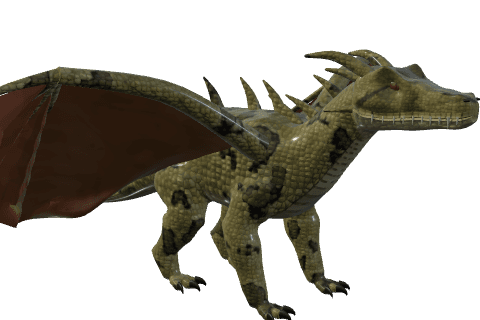
- Find a Spotted. It is one of the commoner crate morphs. Its page in the Morphs tab shows the chance a crate holds one: about 1 Wooden Crate in 36, and 1 Iron Crate in 8. The market is the other place to look.
- Pair it with an unrelated Normal. Half the eggs are Spotted. The clutch warms in 2 minutes and the brood grows up in about an hour, if the Normal hides nothing. A Spotted female then rests 6 hours.
- Get a second, unrelated Spotted. Two Spotted babies from the same clutch are brother and sister, so pairing them costs an egg and 30% of the rest. Pair a Spotted from your clutch with one from a crate or another keeper instead.
- Pair Spotted × Spotted. Each egg is 25% Speckled. The clutch warms for an hour, since a Speckled is Rare, and the brood grows up in about two and a half hours. With four eggs, the chance of at least one Speckled is about 68%.
- Use the Speckled. Speckled × Normal makes every baby Spotted; Speckled × Spotted makes half of them Speckled.
You can try the same pairings in the free breeding calculator before you own a single dragon.
Habits that carry to any dragon breeding game
Most breeding games with real inheritance reward the same habits: plan backwards from the look you want to the genes it needs, treat odds as per egg (a 25% chance can miss a whole clutch), keep lines unrelated, and prove carriers before you build on them.
Not every game works this way. In many of the best dragon breeding games, two elements make a known hybrid and nothing is hidden. If you want hidden genes and odds you can check, you can breed dragons online in Dragonbred, free in a browser on a phone or a computer.
Frequently asked questions
How do you breed dragons in Dragonbred?
Put a female and a male in the pairing boxes on the Breed tab, read the odds, and breed. The clutch warms in a tray, you crack it, and the brood grows up in the nursery before it can breed itself.
How long does it take to breed a dragon?
From pairing to a grown dragon, about 12 minutes for two Normals that hide nothing, and four hours to warm plus 72 to grow up for a sure Legendary. Members' broods grow up in half the time.
How many eggs does a dragon lay?
One to six. A female of average size lays four on average; a bigger one lays more, and a related pair lays fewer.
Can two Normal dragons make a rare dragon?
Yes, if both carry the same recessive gene. Two proven het Albinos look Normal, and each of their eggs has a 25% chance of hatching Albino.
Can you breed dragons online for free?
Yes. Dragonbred is free and plays in any modern browser on a phone or a computer, with optional purchases. Play now starts a pen with no sign-up, and you can save it to an account later.
Published November 23, 2026
Start with twelve founders, read the odds on every egg, and chase the morphs nobody has hatched yet. Free in your browser.
Play Dragonbred free

