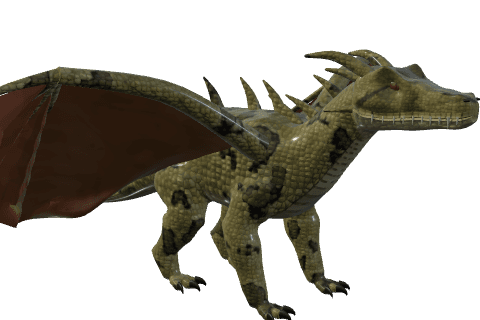
How to breed a Legendary dragon in Dragonbred comes down to one gene, Lava, and that gene can't be made from scratch. Lava is the only Legendary look so far, and every copy of it in the game traces back to a Lava Crate. Once you own a Lava dragon, though, Legendary is bred like any recessive: two hidden carriers give a 25% chance per egg, and two Lavas give 100%.
So the honest answer has two halves. Getting the first Legendary is a matter of crates, the Daily Pass or the market. Breeding more is a matter of planning, and that part is all yours.
What makes a dragon Legendary
A dragon's grade comes only from the looks it shows. Legendary belongs to the fantasy genes, and the one fantasy gene keepers can get so far is the Lava element, which turns a dragon's markings into black crust split by glowing lava.
The rules for Legendary are short:
- Any visible Lava makes a dragon Legendary. A plain Lava and an Albino Lava are both Legendary, whatever else they show.
- A het doesn't count. Lava is recessive, so one copy is invisible. A Normal-looking dragon that carries Lava is graded on what it shows, often Common.
- Hidden Lava doesn't count. Patternless removes the markings, so there is nothing for the lava to fill. A Patternless dragon with two Lava genes shows "hidden Lava" on its card and is graded Rare.
No grade sits above Legendary that a keeper can reach. Brand-new genes, which once graded higher, were removed from the game on 16 October 2026. A grown Legendary releases for 506 Scales, plus 9 for each proven het it carries. For how every grade is worked out, see rarity grades explained.
Why you can't breed one from scratch
Pairing ordinary dragons never makes a Legendary, however clever the pairing. No import carries Lava, the dragons in Wooden and Iron Crates never carry it, and since mutations were removed no egg can grow a gene its parents didn't have.
That is by design. Dragonbred releases one Legendary at a time through a limited featured crate. The first is the Lava Crate. Ice and Galaxy are written into the game as later elements, waiting for crates of their own, and neither can be bred yet.
Where your first Lava comes from
There are five ways in:
- Open Lava Crates. Each costs 250 Embers, the currency bought in the Store, and holds four dragons. One crate in a hundred, 1%, puts a visual Lava in it.
- Buy sealed Lava Crates from other keepers. Sealed crates trade on the market for Scales, and the roll happens only when someone opens one.
- Claim them on the Daily Pass. The free track gives a Lava Crate on day 7 and day 30. Members get one on days 7, 14, 21, 28 and 30. A missed day pauses the pass rather than resetting it.
- Get lucky with a Wooden Crate. One in 1,000 holds a sealed Lava Crate.
- Buy a Lava, or a Lava carrier, on the market. Only dragons that have never bred can be listed, so whatever you buy has its whole breeding life ahead of it.
One percent is a long shot, and there is no pity timer:
| Lava Crates opened | Chance of at least one Lava |
|---|---|
| 1 | 1% |
| 10 | about 10% |
| 25 | about 22% |
| 50 | about 40% |
| 100 | about 63% |
| 200 | about 87% |
The featured crate sells for a limited run, and the Store counts down to its end. When a run ends, sealed crates already out there keep opening, and they still sell between keepers. A crate Lava arrives with two copies and shows Lava alone; any other gene it holds is a hidden copy. The full crate odds are in crates explained.
How to breed a Legendary dragon, step by step
With one Lava in your pen, the plan takes three generations.
- Pair your Lava with an unrelated dragon. Every baby is a 100% het Lava. None show it, but every one carries it.
- Repeat with a second unrelated mate. Now you have two families of hets that share only one parent.
- Pair a het from one family with a het from the other. They are half siblings, so the clutch is 12.5% inbred, and each egg has a 25% chance of hatching Lava.
- Breed your new Lavas together, or to hets. Lava × Lava gives 100% Lava.
Every pairing worth knowing, per egg:
| Pairing | Lava per egg | Inbreeding | At least one Lava in 4 eggs |
|---|---|---|---|
| Lava × unrelated non-carrier | 0%, all hets | 0% | none |
| Het × het, half siblings | 25% | 12.5% | 68% |
| Het × het, full siblings | 25% | 25% | 68% |
| Het × the Lava parent | 50% | 25% | 94% |
| Lava × an unrelated het | 50% | 0% | 94% |
| Lava × Lava | 100% | depends on kinship | 100% |
| 67% het × 67% het | about 11% | depends on kinship | 30% |
The last column assumes four eggs. Inbred pairings lay fewer and lose more before hatching, so a 25% inbred clutch does worse than the table shows. That is why half siblings beat full siblings at the same odds, and why a carrier from another keeper's line is worth buying: paired with one of your hets, it gives 25% per egg with no inbreeding, as long as the two lines share no ancestors. Inbreeding explained has the full cost of each pairing.
The Planner on the Breed tab can rank every pairing in your pen for Lava, and the free breeding calculator shows the odds for any pair before you own it.
Legendary timers, rest and breeding life
Rarer pairings take longer. A clutch warms by the best look its odds show, so a het × het pairing warms on Legendary time even if no Lava hatches. Its brood grows up by what it could be, each look counted by its chance and each hidden Lava too:
| Pairing | Eggs warm | Brood grows up |
|---|---|---|
| Lava × a non-carrier | minutes | about 18 hours |
| Het × het | 4 hours | about 23 hours |
| Lava × het | 4 hours | about 41 hours |
| Lava × Lava | 4 hours | 72 hours |
A Lava dam rests 24 hours after laying, and each feed of a Legendary brood costs 20 Scales. Members' broods grow up in half the time, 36 hours for Lava × Lava. Each feed takes 2 hours off, up to 6 hours for each day a brood takes to grow, so 18 hours for a Lava × Lava brood. The dam rests by her own grade, so a Lava female waits a day between clutches. A male rests only five minutes.
The first step is quick to hatch. Lava × a non-carrier can't hatch a Lava, and when a pairing's odds show nothing but Normal-looking babies, the clutch warms in minutes. Every baby carries Lava, though, so the brood grows up for about 18 hours.
Every dragon has a breeding life of 4 to 12 clutches, counted as dam or sire, and dies laying its last, but you never know which clutch that will be. Its first three are safe. From its fourth, any clutch may be its last, and its twelfth always is; a dragon that isn't inbred is as likely to go at any of those nine, while a dragon that is 25% inbred is twice as likely to go at each, so it usually goes sooner. The Breed tab shows which clutch a pairing would be for each parent, and whether it may be the last.
With one Lava, that matters. Spend its clutches on unrelated mates first, so its genes are safe in hets before anything happens to it. The Breeder branch of the skill tree helps: Steady Nerves cuts the risk of dying while laying, Long Life adds clutches, Iron Blood carries every dragon to its twelfth clutch, and Elder lets a dragon retire to your pen instead of dying at the end. Remember too that a dragon that has bred can never be sold or traded, so decide before its first clutch.
The grades just below Legendary
If Lava is out of reach for now, the next two grades are closer to hand.
Mythic has two looks, both recessive:
- Piebald, bright white patches over everything else. It turns up in crates and as hidden carriers, so two hets give it a 25% chance per egg.
- Regal, gold horns, claws and antlers. Like Lava, it comes only from the Lava Crate, where 1 crate in 100 holds one.
Epic comes two ways:
- A raised super form. Deep Red is two Red genes, Midnight Wings is two Twilight Wings and Super Blue Dots is two Blue Dots. Pair two single-copy dragons and a quarter of the eggs hatch the super.
- Combined looks. Two looks grade one step above the better one, and three or more grade two steps, up to Epic. An Albino Striped, two Rares together, is Epic, and so are three Uncommons on one dragon.
Once you do hold a Lava, the combinations book in the Morphs tab adds eight squares to chase, from Lava on a Normal body to Deep Red Lava. The first keeper to hatch each square holds its world first. Lava dragons and elements covers the routes to each.
Open the odds for your best pair in Dragonbred and see how far you are from your first Legendary.
Frequently asked questions
Can two non-Legendary dragons breed a Legendary?
Yes, if both carry Lava. Two het Lavas look Normal, and each of their eggs has a 25% chance of hatching Lava. But the gene itself has to come from a Lava Crate first.
What is the rarest grade in Dragonbred?
Legendary, which today means Lava. Brand-new genes, which once graded higher, were removed from the game on 16 October 2026.
How long does a Legendary clutch take?
Its eggs warm for 4 hours, and the brood grows up for 44 more, or 22 for members, before it can breed. Feeding the brood takes off up to 12 hours.
Is a het Lava dragon Legendary?
No. One copy of Lava is invisible, and grades only count what a dragon shows. A het Lava is worth its own looks plus what it can pass on.
Published November 18, 2026
Start with twelve founders, read the odds on every egg, and chase the morphs nobody has hatched yet. Free in your browser.
Play Dragonbred free